Edukasi "Isi Piringku" pada Remaja Putri di SMPN 3 Cimarga sebagai Inovasi Pencegahan Stunting

Downloads
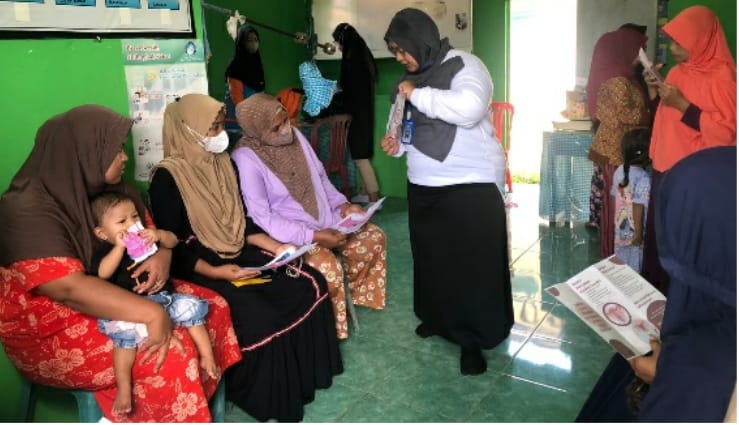
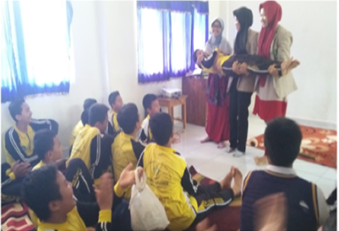
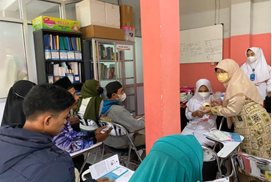
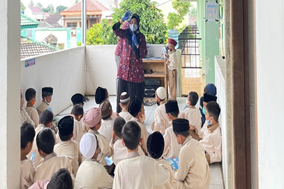
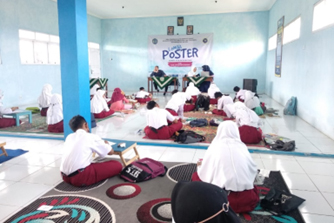
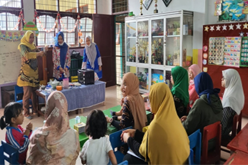
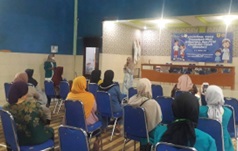
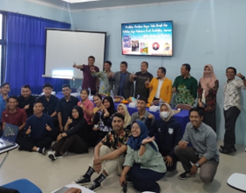
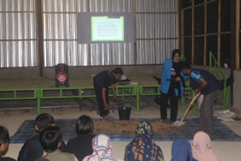
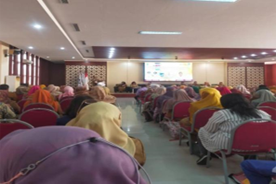
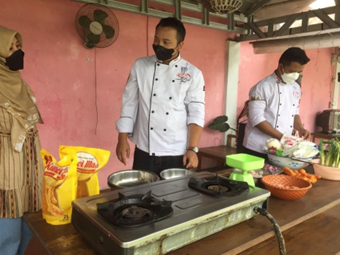
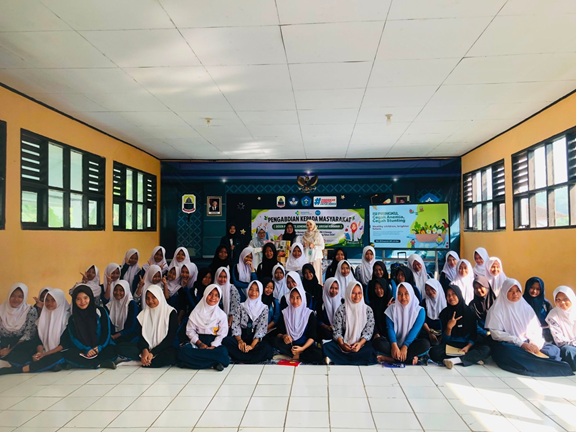
Stunting originates well before pregnancy, which makes adolescent girls, as future mothers, a strategic target for prevention. By September 2024, the Lebak District Health Office had recorded 5,063 stunted children among 108,081 under-five children, with Cimarga Subdistrict ranking third (532 children). This community service program aimed to improve adolescent girls' knowledge of balanced nutrition through "Isi Piringku" (My Plate) education at SMPN 3 Cimarga, Lebak Regency. Between February and October 2026, using a partnership approach with the school and the primary health center, the program comprised situation analysis, coordination and socialization, interactive education on Isi Piringku, anemia and stunting with group activities, and a pre–post evaluation of 48 eighth-grade girls aged 12–14 years. Knowledge was measured with a 20-item questionnaire, and the post-assessment was conducted two months after the education session. The mean knowledge quiz score rose from 80.13 to 96.67, the minimum score from 51 to 80, and the standard deviation fell from 11.5 to 5.9. Height, weight and mid-upper arm circumference (MUAC) remained essentially unchanged (mean weight gain 0.12 kg). The mean MUAC of 23.49 cm lies right at the cut-off for chronic energy deficiency risk, calling for follow-up. Isi Piringku education improved and homogenized balanced-nutrition knowledge among adolescent girls; changes in attitudes and eating practices still need to be reinforced through continued mentoring and integration with school health services.
Black, R. E., Victora, C. G., Walker, S. P., Bhutta, Z. A., Christian, P., de Onis, M., Ezzati, M., Grantham-McGregor, S., Katz, J., Martorell, R., & Uauy, R. (2013). Maternal and child undernutrition and overweight in low-income and middle-income countries. The Lancet, 382(9890), 427–451. https://doi.org/10.1016/S0140-6736(13)60937-X
Chahyanto, B. A., & Hasfika, I. (2025). Edukasi gizi seimbang dengan Isi Piringku pada remaja sekolah menengah di Kota Sibolga. Jurnal Abdi Insani, 12(3), 1110–1117. https://doi.org/10.29303/abdiinsani.v12i3.2388
Contento, I. R. (2008). Nutrition education: Linking research, theory, and practice. Asia Pacific Journal of Clinical Nutrition, 17(Suppl 1), 176–179.
Databoks. (2025). Indonesian provinces with the highest number of stunting cases in 2024. Katadata. https://databoks.katadata.co.id/en/consumer-services/statistics/6835219fd24e4/indonesian-provinces-with-the-highest-number-of-stunting-cases-in-2024
de Onis, M., & Branca, F. (2016). Childhood stunting: A global perspective. Maternal & Child Nutrition, 12(Suppl 1), 12–26. https://doi.org/10.1111/mcn.12231
Food and Agriculture Organization of the United Nations. (2016). Plates, pyramids, planet: Developments in national healthy and sustainable dietary guidelines: A state of play assessment. FAO & Food Climate Research Network, University of Oxford. https://www.fao.org/sustainable-food-value-chains/library/details/en/c/415611
Gibson, R. S. (2005). Principles of nutritional assessment (2nd ed.). Oxford University Press.
Harvard T.H. Chan School of Public Health. (n.d.). Healthy eating plate. The Nutrition Source. https://nutritionsource.hsph.harvard.edu/healthy-eating-plate/
Irianti, B., dkk. (2024). Remaja dan kesehatan (pencegahan stunting sejak dini). Deepublish Digital.
Kementerian Kesehatan Republik Indonesia. (2014). Peraturan Menteri Kesehatan Nomor 41 Tahun 2014 tentang Pedoman Gizi Seimbang. https://peraturan.bpk.go.id/Download/109856/Permenkes%20Nomor%2041%20Tahun%202014.pdf
Kementerian Koordinator Bidang Pembangunan Manusia dan Kebudayaan. (2025, 2 Mei). Prevalensi stunting tahun 2024 turun jadi 19,8 persen, pemerintah terus dorong penguatan gizi nasional. https://www.kemenkopmk.go.id/prevalensi-stunting-tahun-2024-turun-jadi-198-persen-pemerintah-terus-dorong-penguatan-gizi
Kusumawardani, H., Rakhma, L. R., Laili, N. A., Putri, A. M., Anggraini, D., Rosida, S. M., Mastura, K., Fadilla, R. R., & Salsabila, C. A. A. (2022). Peningkatan pengetahuan remaja mengenai pemenuhan gizi seimbang melalui Isi Piringku di MAN 1 Surakarta. Jurnal Abdi Insani, 9(3), 1200–1208. https://doi.org/10.29303/abdiinsani.v9i3.700
Mardika, I. W., & Wisnuwardani, R. W. (2025). Adolescent mothers' nutritional knowledge and stunting risk: A systematic review. Mulawarman International Conference on Tropical Public Health (MICTOPH), 2(2). https://e-journals2.unmul.ac.id/index.php/mictoph/article/view/4319
Murthi, A. K., Wratsangka, R., Tungka, E. X., & Yastani, D. (2026). Dampak anemia terhadap kualitas hidup fisik dan psikologis pada remaja: Tinjauan literatur. Jurnal Kesehatan Reproduksi, 13(1), 24–37. https://doi.org/10.22146/jkr.77988
Notoatmodjo, S. (2012). Promosi kesehatan dan perilaku kesehatan. Rineka Cipta.
Patimah, S. (2023). Strategi pencegahan stunting pada usia baduta (bawah dua tahun). Deepublish Digital.
Patton, G. C., Sawyer, S. M., Santelli, J. S., dkk. (2016). Our future: A Lancet commission on adolescent health and wellbeing. The Lancet, 387(10036), 2423–2478. https://doi.org/10.1016/S0140-6736(16)00579-1
Rukmana, E., Sandy, Y. D., Damanik, K. Y., Pristanti, N. A., & Fransiari, M. E. (2024). Edukasi gizi seimbang pada siswa SMA Swasta Alwashliyah 1 Kota Medan. Jurnal Dedikasia: Jurnal Pengabdian Masyarakat, 4(2), 105–115. https://doi.org/10.30983/dedikasia.v4i2.8691
Tumanggor, L. (2025). Pemberian edukasi gizi media poster dan kipas "Isi Piringku" terhadap peningkatan pengetahuan gizi seimbang pada siswa/i SMPN 31 Medan 2023. BEST Journal (Biology Education, Sains and Technology), 8(2), 302–308. https://doi.org/10.30743/best.v8i2.12892
Victora, C. G., Adair, L., Fall, C., Hallal, P. C., Martorell, R., Richter, L., & Sachdev, H. S. (2008). Maternal and child undernutrition: Consequences for adult health and human capital. The Lancet, 371(9609), 340–357. https://doi.org/10.1016/S0140-6736(07)61692-4
World Health Organization & Food and Agriculture Organization of the United Nations. (2024). What are healthy diets? Joint statement by the Food and Agriculture Organization of the United Nations and the World Health Organization. World Health Organization. https://www.who.int/publications/i/item/9789240101876
Copyright (c) 2026 Ninik Wahyuni, Kadar Kuswandi, Eli Inayanti

This work is licensed under a Creative Commons Attribution-NonCommercial-ShareAlike 4.0 International License.